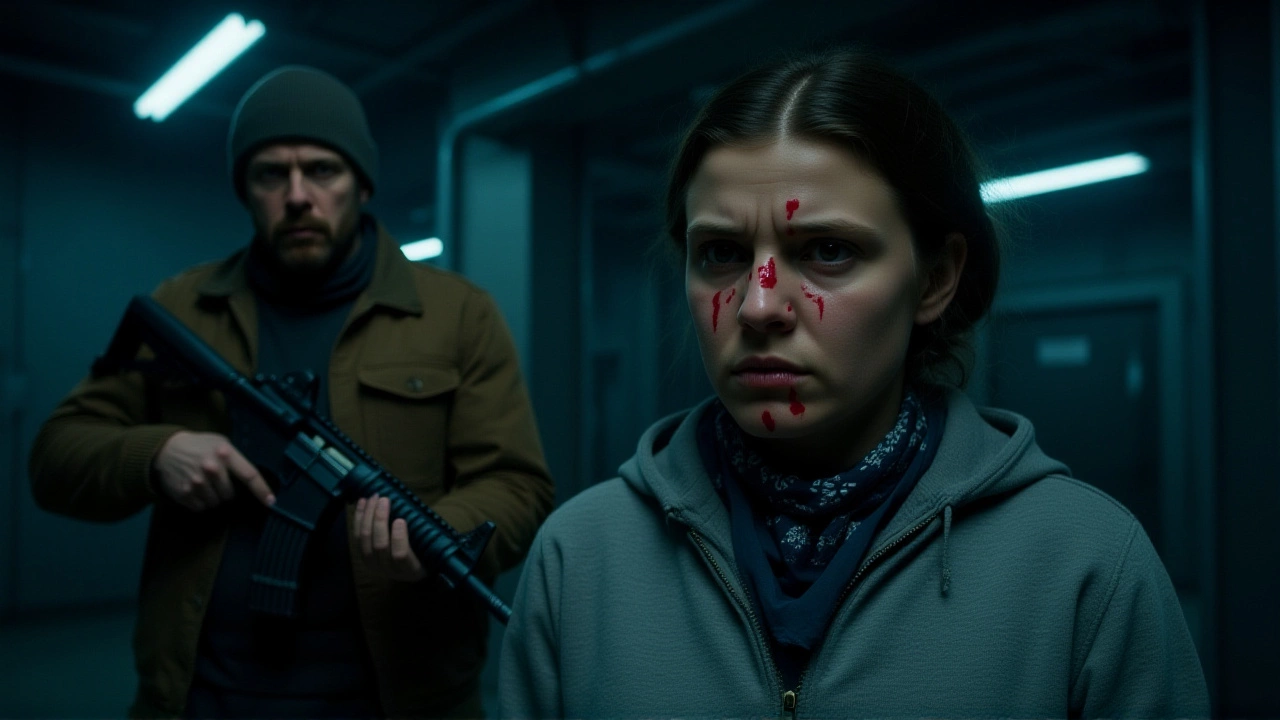
The final chapter of Stranger Things arrived not with a bang, but with a quiet, aching farewell — four episodes released on November 26, 2025, and the rest trickling out like last Christmas lights before the power cuts out. Netflix’s flagship sci-fi horror series, which began in July 2016 as a love letter to E.T. and The Goonies, is ending not with a reboot or spinoff, but with a gut-punch of closure. The cast, now in their late teens and early twenties, didn’t just play their roles — they lived them. And on the eve of the finale, the emotional weight of that nine-year journey was impossible to ignore.
Christmas Eve, New Year’s Eve, and the Last Goodbye
Netflix didn’t just release a season — it engineered a holiday event. Four episodes dropped on November 26, 2025, the day after Thanksgiving. Three more followed on Christmas Day. And the final episode? Released at midnight on New Year’s Eve 2025. It wasn’t a strategy. It was a gift. And fans knew it. The timing wasn’t accidental. It mirrored the show’s own rhythm: small-town holidays, childhood rites of passage, and the slow creep of adulthood into the supernatural. The Duffer Brothers, Matt Duffer and Ross Duffer, spent years crafting this ending. They knew they weren’t just wrapping up a TV show — they were closing a chapter in the lives of millions who grew up with Eleven (Millie Bobby Brown), Jim Hopper (David Harbour), and Will Byers (Noah Schnapp).
The Cast Who Grew Up On Screen
At the press events leading up to the premiere, Millie Bobby Brown didn’t talk about stunt doubles or CGI. She talked about her first period on set. David Harbour choked up describing how he’d watched Will go from a quiet, bullied boy to someone who now hears voices from another dimension — and still chooses to help others. Noah Schnapp, now 22, said he cried during his final scene not because of the script, but because he realized he’d never have to wear those same red plaid shirts again. The entire cast, from Sadie Sink to Charlie Heaton, had been with the show since the beginning. They weren’t actors anymore. They were family.
Executive producer Shawn Levy, who’s directed more than half the series’ episodes, called the final shoot "the most emotional thing I’ve ever done in my career." He recalled filming the last scene between Eleven and Hopper in the Hawkins National Lab basement — the same place where they first met in Season 1. "We didn’t rehearse the tears," he said. "They just came. And we kept rolling. Because that’s what this show was — real emotion dressed in Demogorgons and walkie-talkies."
Vecna’s Shadow and Max’s Fate
While fans cheered the return of Eleven’s powers and the reappearance of the Upside Down, the real horror wasn’t in the monsters — it was in the silence. Sadie Sink’s Max Mayfield remains in a coma, her fate unresolved after Vecna’s attack in Season 4. The Duffer Brothers made a bold choice: they didn’t give her a miraculous recovery. She’s still there. Unconscious. Breathing. But not present. And that’s the point. Not everyone gets a happy ending. Not even in Hawkins.
As Eric Deggans of KPBS noted, the show’s genius has always been in its ability to make the supernatural feel personal. "It’s not about how many portals open," he wrote in his November 26 review. "It’s about who gets left behind. Who loses their voice. Who stops believing in magic — even when it’s real."
Why Hawkins Still Matters
For nine years, the fictional town of Hawkins, Indiana became a character itself. Its high school, its arcade, its underground labs — all of it was a time capsule of the 1980s, filtered through the lens of a generation raised on Netflix. The military’s absurdly over-the-top presence — a force that somehow never figured out which kids were connected to Eleven — was never meant to be realistic. It was satire. A commentary on how institutions fail the vulnerable. And now, in the final season, that failure is personal. Hopper is a broken man. Eleven is terrified of her own power. Will is hearing whispers from the other side — whispers that might be his brother… or something worse.
The show’s critics said it recycled the same plot: monster attacks, government cover-ups, kids with special powers. But those who watched closely knew better. Each season was a different kind of loss. Season 1: friendship. Season 2: innocence. Season 3: nostalgia. Season 4: survival. Season 5? It’s about letting go.
What Happens Now?
The finale, set to drop on New Year’s Eve 2025, won’t just close a story — it’ll close a cultural moment. No one knows if Netflix will revive the universe. But the Duffer Brothers have said this is it. The final shot? It’s not of a monster. Not of a portal. It’s of a family, sitting around a kitchen table, eating pizza. No powers. No monsters. Just quiet. Just normal. And that’s the most terrifying — and beautiful — thing of all.
Frequently Asked Questions
Why did Netflix stretch the final season across three dates?
Netflix deliberately spaced the final season’s release to build emotional momentum: four episodes on November 26, 2025, three more on Christmas Day, and the finale on New Year’s Eve. This mirrored the show’s themes of holidays, family, and time passing. It turned a TV release into a shared cultural ritual — like watching a movie on Christmas morning with loved ones. The pacing also gave fans time to process each emotional beat before the final blow.
Is Max Mayfield really going to die?
The show has never confirmed Max’s fate. She remains in a coma after Vecna’s attack, with no indication she’ll wake up. Unlike past seasons, where characters were revived through supernatural means, Season 5 treats her condition as irreversible — a rare moment of permanence in a world full of resurrections. This choice signals the show’s shift from fantasy to realism: not every wound heals, and some losses are final.
What’s the significance of Will’s powers in the final season?
Will Byers’ connection to the Upside Down has evolved from passive victimhood to active resonance. In Season 5, he doesn’t just hear voices — he understands them. He’s learning to speak the language of the dimension, which may be the key to closing the portal. But there’s a cost: the more he listens, the more he loses himself. His arc is a metaphor for trauma — the more you try to understand your pain, the harder it is to return to normal life.
Will there be a Stranger Things spinoff?
The Duffer Brothers have stated definitively that Season 5 is the end of the core story. While Netflix may explore spinoffs (a Hawkins High drama, perhaps, or a government conspiracy series), the original ensemble cast’s journey concludes with the New Year’s Eve finale. There will be no Season 6. The final scene — a quiet family dinner — was designed to be the last frame of this particular story.
Why did Vecna’s appearance change in Season 5?
Vecna’s new look — more human, less monstrous — reflects his evolution from a vengeful entity to something closer to a mirror of the characters’ inner pain. According to interviews with David Harbour and Millie Bobby Brown, Vecna’s form now resembles a twisted version of Eleven’s own trauma. His face is partially her own. His voice, sometimes, is Hopper’s. He’s not just a villain — he’s the embodiment of everything they’ve buried.
How did the cast cope with filming the final scenes?
The final week of filming was closed to crew and cameras. Only the core cast and the Duffer Brothers were present. Many actors brought personal items from their childhoods to the set — a favorite sweater, a toy from 1986 — to ground themselves. Millie Bobby Brown said she slept in her Eleven costume the night before her last scene. "It felt like saying goodbye to a part of me," she said. The production team left a single rose on each chair the morning after the final shoot.